
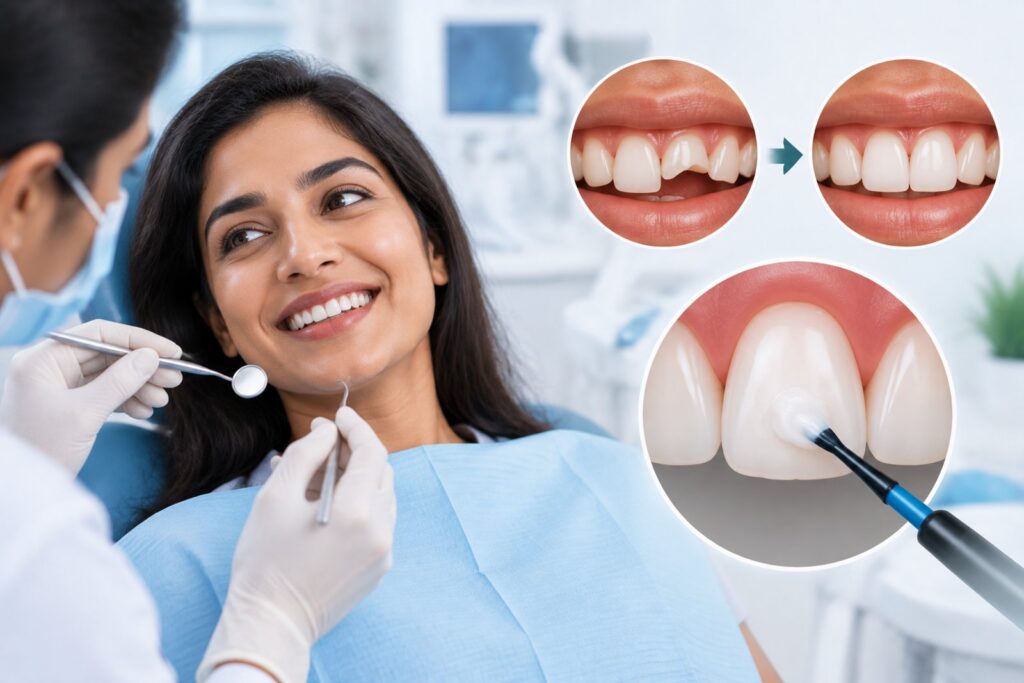
What is Dental Bonding?
Dental bonding is a cosmetic dentistry treatment. It uses a tooth-colored resin to repair chipped, cracked, or damaged teeth. Because the resin matches your natural teeth, it blends in well. Many people choose dental bonding because it is quick, painless, and affordable. In fact, dental bonding can often be done in just one visit. This makes it a popular choice for fixing minor dental problems.
Common Causes of Chipped and Damaged Teeth
Teeth can chip or break for many reasons. Sometimes, an accident or injury is to blame. Other times, daily habits or health issues may cause damage. For example, biting hard foods or using teeth to open packages can lead to chips. In addition, tooth decay or old fillings may weaken teeth. Here are some common causes:
Because these issues are common, dental bonding is a helpful solution for many people.
How Dental Bonding Works
Dental bonding uses a special resin that sticks to your tooth. First, your dentist chooses a shade that matches your teeth. Then, they shape and polish the resin to look natural. Since the process is simple, most people do not need anesthesia. However, if the tooth is near a nerve, your dentist may numb the area. After the resin is applied, a special light hardens it. As a result, your tooth looks smooth and whole again.
Benefits of Dental Bonding
Dental bonding offers many advantages. Not only is it quick, but it is also cost-effective. Unlike crowns or veneers, bonding usually requires little or no tooth removal. Here are some key benefits:
Because of these benefits, dental bonding is a top choice for minor tooth repairs.
The Dental Bonding Procedure: Step-by-Step
Knowing what to expect can help you feel at ease. Here is a step-by-step look at the dental bonding process:
Most appointments take less than an hour per tooth. Because the process is simple, you can return to normal activities right away.
Aftercare and Longevity
Proper care helps dental bonding last longer. Although bonding is strong, it is not as tough as natural teeth. Therefore, you should avoid biting hard objects or using your teeth as tools. With good care, dental bonding can last three to ten years. Here are some tips for aftercare:
If you notice any chips or changes, contact your dentist for advice.
Prevention Tips for Tooth Damage
While dental bonding can fix chips, prevention is always best. For example, wearing a mouthguard during sports can protect your teeth. In addition, avoid chewing on hard items. Here are more ways to prevent tooth damage:
Because healthy habits protect your smile, they can help you avoid future dental repairs.
Frequently Asked Questions (FAQs)
For more details, visit trusted sources like the American Dental Association or talk to your dentist.
Consult Dr. D.S.Batth to find out if dental bonding is right for you.